
Bioinformatics Engineer Variant USA

The client
LatchBio
LatchBio started with a simple observation: biological data was exploding, and the tools scientists needed to analyze it hadn’t kept up. Three UC Berkeley founders built the fix: a no-code platform where any biologist could run powerful computational pipelines without writing a single line of code. $5M seed from Lux Capital and General Catalyst. $28M Series A.
The distribution unlock: instead of selling lab by lab, we became the analysis layer embedded in kits from 10X Genomics, Vizgen, Takara Bio, and others. When a scientist buys a kit, LatchBio ships with it. One partnership, thousands of scientists.
By 2025 we had something rare, we were already inside biological workflows before the AI wave hit. So we asked: can frontier AI actually do computational biology the way a PhD scientist would? No rigorous standard existed. We built one.
We’ve shipped a family of benchmarks at benchmarks.bio — SpatialBench, scBench, and EpiBench — and the frontier labs (Anthropic, OpenAI, xAI, +) use them today to evaluate their models.
We are ~50 people in SF, well-funded, with shipped products at the bleeding edge of biological AI. We’re hiring the domain experts who will write the rubric the entire life science AI industry gets measured against.
About this role
Human genetics is one of the most method-dense fields in biology. At every stage — from aligning sequencing reads to interpreting a fine-mapped locus to making a causal inference claim — a scientist is sitting between noisy population data and a judgment call that shapes what gets followed up and what gets dropped. VariantBench is our attempt to find out whether AI can make those calls.
The eval format is strict: data in, structured output out, graded against known ground truth. Every problem has a verifiable correct answer, no LLM judging LLM. The core skill we’re hiring for is the ability to design excellent questions. That means questions that test biological reasoning, not implementation details. Whether you used SuSiE or FINEMAP doesn’t matter. Whether you understand what the credible set tells you about the causal variant does.
We’re starting with population-scale analysis: GWAS, fine-mapping, colocalization, Mendelian randomization, where published summary statistics are rich enough to build rigorous, falsifiable evals. The more a candidate has ranged across the full stack: variant calling through QC through functional annotation through clinical interpretation, the more valuable they are to where this bench is going.
We need someone who has personally taken genetic association data and influenced what a result actually means; for a gene, a pathway, a patient. Not just someone who ran the pipeline. Someone who understood what came out the other end.
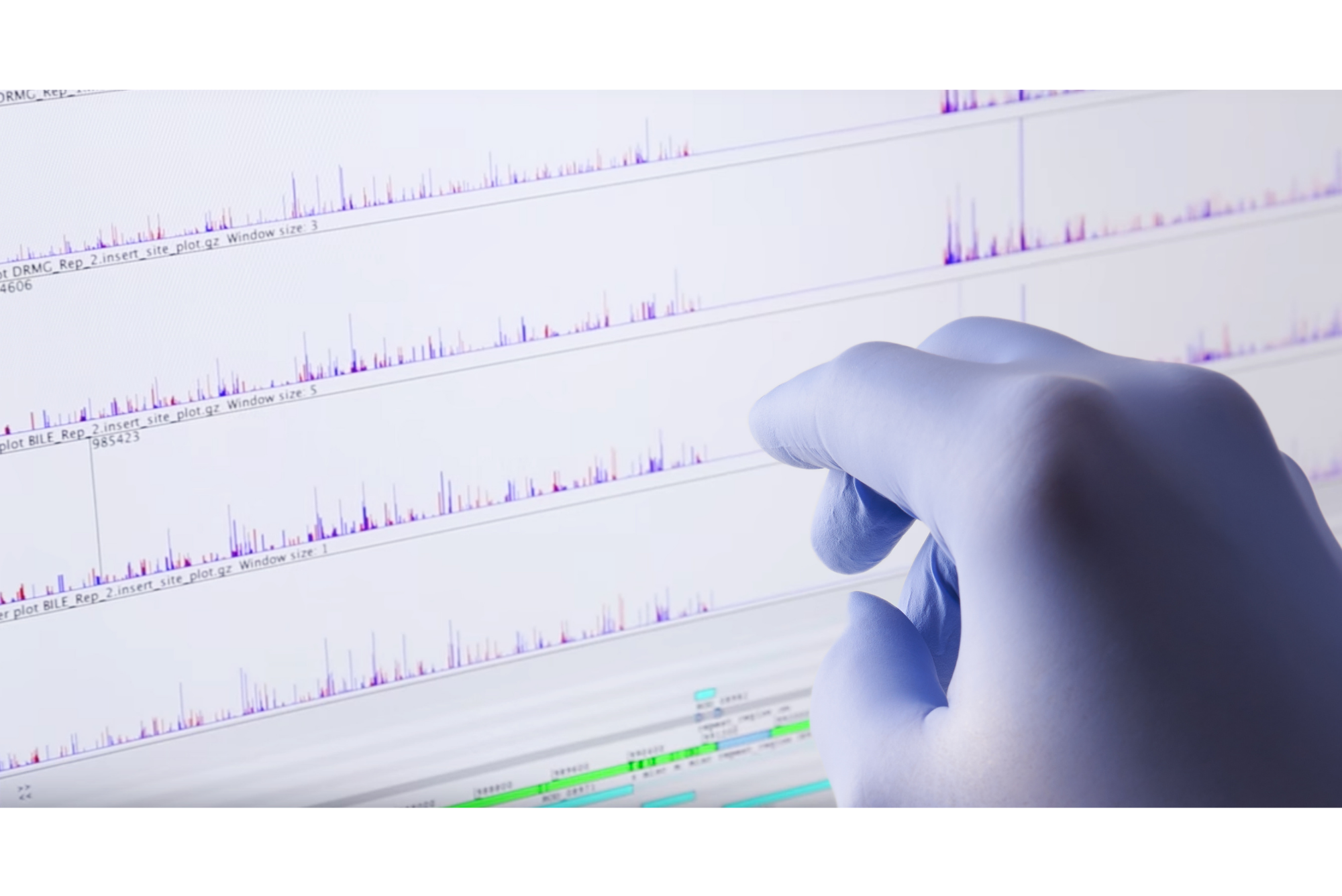
your next career starts here
Discover a role where your skills drive innovation and make an impact
Who are we looking for...
- 5+ years hands-on experience with genomics or genetics data
- Experience in drug mechanism of action studies using population genomics
- Proficiency in Python and/or R
what you can expect...
- You will contribute to our technical approach to teaching agents how to understand and handle complex genomic data, working across end-to-end data analysis workflows from instrument outputs to real scientific decisions.
- You will work as part of a team of software engineers and biologists building datasets to teach these agents to reason better across:
- Sequencing QC → alignment & assembly
- Variant calling & filtering
- Clinical variant interpretation
- Population genetics → algorithmic reasoning
The hiring proces
Step 1
Interview with SRC Recruiter
Step 2
Finetuning CV – Intro
Step 3
Pre-interview preparation
Step 4
Round 1: Hiring manager 1 on 1
Step 5
Round 2: Loop interviews
Step 6
Round 3: Presentation and Q&A
Step 7
Background check
Step 8
Offer process / paperwork
Step 9
Celebrate!